2026 Guide To Countries Offering Citizenship By Investment


The global landscape of investment migration has entered a period of unprecedented institutionalization and regulatory maturity as of 2026. What was once a fragmented market characterized by aggressive price competition and minimal oversight has transformed into a highly coordinated international sector governed by supra-national agreements, harmonized due diligence standards, and a focus on long-term sustainability. For the modern high-net-worth individual (HNWI), the acquisition of a second citizenship is no longer a mere transactional purchase of a travel document; it is a strategic maneuver within a broader framework of geopolitical risk mitigation, fiscal optimization, and the securing of a multi-generational legacy. This transition is most visible in the implementation of the 2024 Memorandum of Understanding (MoU) among Caribbean nations and the subsequent establishment of the Eastern Caribbean Citizenship by Investment Regulatory Authority (ECCIRA), which serves as a central hub for monitoring and enforcement across the region.
The year 2026 also marks a critical juncture in the relationship between citizenship-by-investment (CBI) programs and major global powers, specifically the European Union and the United States. The introduction of the European Travel Information and Authorization System (ETIAS) and the expansion of U.S. travel restrictions under Presidential Proclamation 10998 have introduced a layer of "algorithmic uncertainty" to global mobility, forcing programs to adapt their vetting and residency requirements to maintain international trust. Investors must now navigate a landscape where "visa-free" travel is increasingly conditional upon the transparency and security of the program through which their citizenship was obtained.
The Caribbean Paradigm: Regional Harmonization and the $200,000 Floor
The Caribbean remains the epicenter of the CBI industry, accounting for the highest volume of applications globally. However, the "old model" of pure travel facilitation with zero physical presence has been definitively retired in favor of a "genuine links" model. Under the 2024 regional agreement, the five Eastern Caribbean islands—Antigua & Barbuda, Dominica, Grenada, St. Kitts & Nevis, and St. Lucia—have established a minimum investment threshold of $200,000 for the donation route, effectively ending the period of sub-$150,000 passports.
St. Kitts and Nevis: The Enduring Platinum Standard
As the pioneer of the CBI industry, St. Kitts and Nevis continues to leverage its reputation for stability and high standards to position itself as a premium option in 2026. Having already raised its investment entry point in 2023, the federation set the precedent for the rest of the region. The program is particularly favored by investors seeking long-term security and a passport with a historically high level of global recognition, ranking 22nd on the 2025 Henley Passport Index.
The Sustainable Island State Contribution (SISC) serves as the primary donation route, requiring a $250,000 contribution for a single applicant. A significant policy shift in late 2025 was the expansion of dependent eligibility, which now allows children up to the age of 30 to be included in an application without the requirement of being enrolled in full-time education, provided that their financial reliance on the main applicant is documented through shared accounts or affidavits. This adjustment reflects a nuanced understanding of the modern family structure, where adult children may still be building their careers or in transitional life phases.

Source: Consolidated pricing data from.
The real estate route in St. Kitts and Nevis requires an investment in government-approved luxury villas or resort shares, with a minimum commitment of $400,000. These properties are often part of branded hotel developments that offer the potential for rental income, typically estimated between 3% and 5% annually. The holding period for real estate is seven years, after which the property may be resold, though the citizenship status of the original investor remains permanent.
Antigua and Barbuda: Family Value and the University Fund
Antigua and Barbuda has carved out a niche as the most cost-effective jurisdiction for large families in 2026. The National Development Fund (NDF) donation starts at $230,000, but it is the University of the West Indies (UWI) Fund that remains the most competitive option for households of six or more. With a $260,000 contribution, a large family can secure citizenship for all members, including a one-year tuition-only scholarship for one family member at the university.
Due diligence in Antigua and Barbuda is notably rigorous, involving mandatory virtual interviews for all applicants and dependents aged 16 and older. The interview fee is $1,500 per application, and the process is designed to verify the source of funds and the applicant’s motivations for seeking second citizenship. Furthermore, Antigua and Barbuda is the only Caribbean program to maintain a persistent residency requirement: citizens must spend at least five days in the country during the first five years of their citizenship.

Source: Compiled from.
The real estate market in Antigua and Barbuda focuses on luxury resort developments and branded hotel units, with a minimum investment of $300,000. Investors often see strong ROI due to the island’s thriving tourism sector, with rental yields ranging from 4% to 8%.
Grenada: The E-2 Visa Gateway and Sibling Inclusion
Grenada’s program is distinguished by two primary factors in 2026: its E-2 Investor Visa treaty with the United States and its exceptionally flexible family inclusion rules. As the only Caribbean CBI program offering a pathway to a U.S. non-immigrant visa, Grenada appeals strongly to investors who wish to establish businesses and reside in the United States. This mobility advantage is often cited as the key driver for Grenada’s consistently high ranking in citizenship indices, placing 3rd in the 2025 Henley Citizenship Program Index.
Family inclusion in Grenada is among the most expansive in the world, allowing for the addition of siblings of the main applicant or spouse, provided they are unmarried and without children. This is a rare feature that significantly increases the program's appeal for multi-generational wealth planning. The National Transformation Fund (NTF) donation is $235,000 for a family of up to four members, while the real estate threshold starts at $270,000 for approved hotel developments.
The due diligence process in Grenada includes a mandatory virtual interview for all applicants aged 17 and older, with a fee of $1,000 per person. The government has also moved to harmonize its vetting with regional standards, using independent firms to conduct deep background checks into the source and path of investment funds.
Dominica: Resilient Affordability and the Nature Isle
Dominica has successfully navigated significant external pressures in recent years, including the suspension of its visa-free access to the United Kingdom and the United States. Despite these challenges, it remains a high-volume program due to its well-established processing infrastructure and the lowest donation entry point in the Caribbean at $200,000. The program is often characterized as "no-nonsense" and "high-value," focusing on efficient processing for single applicants and small families.
The real estate option in Dominica starts at $200,000 and is primarily focused on eco-tourism and sustainable luxury resorts. This alignment with "green" investment themes has helped Dominica maintain a boutique but stable market, with rental incomes estimated at 2% to 4% annually. Mandatory virtual interviews are required for all applicants aged 16 and over, at a cost of $1,000 per person.
St. Lucia: Diversified Investment Vehicles
St. Lucia offers perhaps the most multifaceted CBI program in the Caribbean, providing four distinct investment routes: donation, real estate, government bonds, and enterprise projects. This variety allows investors to select an asset class that aligns with their specific risk tolerance and financial goals. The National Action Bond (NAB) option is particularly unique, requiring a $300,000 investment in non-interest-bearing government bonds that must be held for five years. This option is highly appealing to risk-averse HNWIs who prioritize capital preservation over non-refundable contributions.
The National Economic Fund (NEF) donation starts at $240,000 for a single applicant, reflecting a recent adjustment to meet regional standards. Real estate investments start at $300,000, often in high-end developments that offer rental yields between 3% and 5%. St. Lucia also mandates an interview for the main applicant, which must be conducted through a licensed lawyer or agent.

Source: Compiled from.
The European Pinnacle: Malta and the MEIN Program
Malta continues to set the global benchmark for citizenship-by-investment through its Maltese Exceptional Investor Naturalization (MEIN) program, which placed first in the Global Citizenship Program Index for the tenth consecutive year in 2025. Malta’s appeal lies in its full EU membership, providing citizens with the right to live, work, and study in any of the 27 EU member states, as well as visa-free access to 186 countries.
The MEIN program is not a direct "sale" of citizenship but a multi-year residency-to-naturalization pathway that requires "exceptional services or contributions to the nation". Applicants must choose between a 12-month or 36-month residency period, with a higher contribution required for the expedited 12-month route.
Financial requirements for the MEIN program include:
- Government Contribution: €750,000 for the 12-month residency route, or €600,000 for the 36-month route, plus €50,000 for each additional dependent.
- Real Estate Commitment: The purchase of residential property worth at least €700,000, or a lease for a minimum annual rent of €16,000, held for a minimum of five years.
- Philanthropic Donation: A compulsory donation of at least €10,000 to a registered Maltese NGO approved by the Community Malta Agency.
Malta’s due diligence is the most rigorous in the world, involving a four-tier background check that costs €15,000 for the main applicant and €10,000 per dependent. The program strictly excludes nationals from several countries, including Russia, Belarus, Iran, and North Korea, as well as any individual on the U.S. travel ban list.
The Pacific Speed and African Value: Vanuatu and São Tomé
In the Oceania and African regions, programs emphasize speed and low entry costs, often serving as the fastest "Plan B" options for HNWIs.
Vanuatu: The Fastest Program Worldwide
Vanuatu remains the only program capable of granting citizenship in as little as 30 to 60 days. The process is entirely remote and requires no residency, language tests, or physical visits. The most common route is the Development Support Program (DSP), which requires a non-refundable donation of $130,000 for a single applicant or $180,000 for a family of four.
A significant reform introduced in 2025-2026 is the launch of the e-Government Citizenship Portal and the partnership with international due diligence agencies in London and Singapore to address EU concerns over vetting standards. Vanuatu is actively working to restore its full Schengen visa-free travel, which is expected by mid-2026 following these enhanced security protocols.
São Tomé and Príncipe: The Global Value Leader
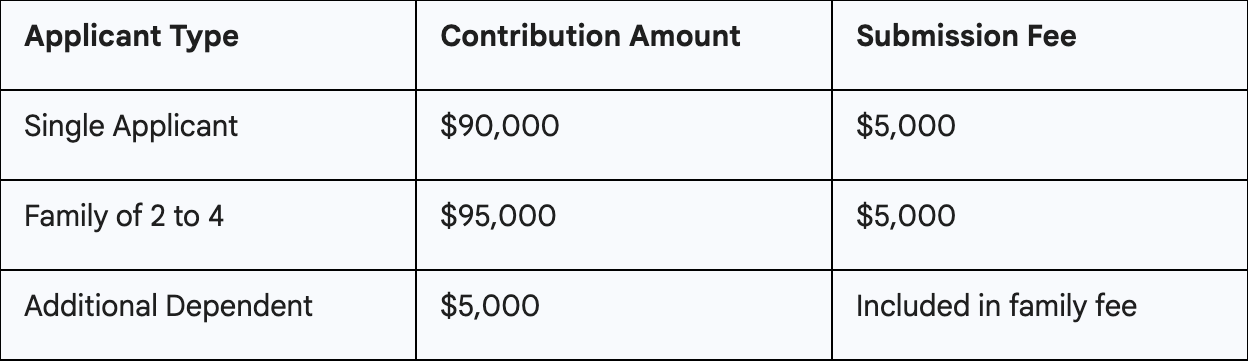
São Tomé and Príncipe has disrupted the 2026 market by launching the most affordable citizenship program globally, with a headline contribution of $90,000 for a single applicant. The program supports the National Transformation Fund, which finances renewable energy, eco-tourism, and infrastructure projects.
A unique strategic advantage of São Toméan citizenship is the pathway to Portuguese naturalization. As a member of the Community of Portuguese Language Countries (CPLP), citizens of São Tomé and Príncipe only require seven years of residency to apply for Portuguese citizenship, compared to the ten years required for most other non-EU nationals. The program is 100% remote, accepts third-party payments (including funds originating from cryptocurrency), and processes applications in as little as 6 to 8 weeks.
Source: Compiled from.
The Nauru Economic and Climate Resilience Citizenship Program
Nauru launched its Economic and Climate Resilience Citizenship Program (NECRCP) in late 2024 to support the island's fight against rising sea levels and biodiversity loss. The program provides an alternative, politically neutral passport with visa-free access to 89 destinations, including the UK, Hong Kong, and the UAE.
The investment is a $105,000 donation to the Nauru Treasury Fund for a single applicant, which increases to $110,000 for a family of four. While Nauru faced a setback in December 2025 when the UK restricted its visa-free access, the program continues to attract interest from investors who value its straightforward, 3-to-4 month processing time and its focus on environmental sustainability.
Regulatory Compliance and the "Six CBI Principles"
The year 2026 represents the full implementation of the "Six CBI Principles," a framework agreed upon between Caribbean nations and the United States to harmonize due diligence and enhance security. This framework has become the de facto global standard, influencing programs far beyond the Caribbean.
The Six Principles of 2026:
- Mandatory Interviews: All applicants must undergo interviews (virtual or in-person) to verify identity and the source of wealth.
- Harmonized Minimum Pricing: A collective agreement to maintain a $200,000 price floor to prevent a "race to the bottom".
- Information Sharing: The creation of centralized regional databases to share information on application denials and suspicious financial activity.
- Third-Party Audits: Periodic auditing of program operations by independent, international risk assessment firms.
- Biometric Collection: Integration of fingerprints and facial scans into e-passport standards.
- Enhanced Source-of-Funds Vetting: Requirement for detailed evidence trails on the lawful origin and movement of investment capital.
The Impact of ETIAS and UK eTA
By late 2026, the European Travel Information and Authorization System (ETIAS) will become mandatory for all visa-exempt travelers entering 30 European countries. For CBI passport holders, this introduces a new layer of friction. While a Caribbean passport theoretically allows visa-free entry, the ETIAS authorization can be delayed for up to 30 days or rejected on a case-by-case basis. Industry experts fear "selective enforcement," where the EU may use ETIAS to restrict access for CBI citizens without formally revoking a country’s visa-free status.
Similarly, the UK's Electronic Travel Authorization (ETA), effective January 2025, requires all Caribbean citizens to pay a £10 fee and obtain pre-clearance before travel. These digital systems mark the end of spontaneous "book a flight on impulse" travel, shifting the focus of CBI toward long-term residency and fiscal security rather than simple transit.
Economic and Fiscal Optimization for HNWIs
A primary motivator for seeking second citizenship in 2026 is tax optimization, but this must be approached with a clear understanding of the difference between "citizenship" and "tax residency". Citizenship provides the legal bond to a country, but tax residency is determined by where an individual actually lives and earns their income.
Territorial Taxation and Global Hedges
Many CBI jurisdictions, such as Antigua & Barbuda and St. Kitts & Nevis, offer a zero-tax regime for non-residents, meaning there are no taxes on personal income, capital gains, inheritance, or wealth for those who do not reside in the country. This allows HNWIs to legally structure their global income to minimize liabilities while remaining fully compliant with international regulations.
The rising tax pressures in jurisdictions like the UK and Australia have driven an increase in "strategic residency," where investors use their CBI passports to establish new tax homes in territorial-tax countries like Panama or Costa Rica. In 2026, the key to successful optimization is demonstrating "substance"—maintaining a physical home, spending the required number of days in the country, and having actual ties to the jurisdiction.

Source: Compiled from.
The Changing Face of Global Mobility: US Travel Bans
The most significant regulatory hurdle in 2026 is the expansion of U.S. travel restrictions under Presidential Proclamation 10998. The U.S. government has explicitly targeted countries with "Citizenship by Investment without residency," leading to the suspension of visa issuance for nationals of Antigua & Barbuda and Dominica. These "partial bans" suspend entry for temporary visitors, students, and exchange visitors (B, F, M, and J classifications) who do not already hold a valid visa.
The rationale provided by the U.S. administration is that CBI programs allow individuals to bypass U.S. screening by obtaining a second passport, potentially evading travel, financial, or banking restrictions. This development has forced Caribbean governments to double down on their commitment to regional oversight and mandatory residency requirements. Successful applicants in the Caribbean will now be required to spend a total of 30 days in their second country during the first five years of citizenship to demonstrate a "genuine link" and preserve their mobility rights.
Future Outlook: The Maturation of the Industry
As the market enters late 2026, the distinction between "citizenship-by-investment" and "residency-by-investment" (Golden Visas) is blurring. Many investors are choosing a "hybrid" strategy—obtaining a Caribbean passport for immediate mobility and tax optimization, while also holding an EU residency permit in a country like Greece or Portugal to ensure permanent access to the Schengen Area.
The 2025 Global Citizenship Program Index underscores that the most successful programs are those that have adapted to external pressures by prioritizing compliance over volume. The emergence of new players in Africa and South America suggests that the industry will continue to expand, but only those programs that can offer a credible, transparent, and well-governed platform will survive in an environment of heightened international scrutiny.
In conclusion, the 2026 investor must view citizenship-by-investment as a long-term strategic asset that requires careful management. The era of the "quick fix" passport is over, replaced by a sophisticated ecosystem of sovereign products that offer security, mobility, and opportunity in an increasingly uncertain global environment. By aligning with established programs that lead in due diligence and international cooperation, HNWIs can build a sovereign portfolio that withstands the test of time and shifting geopolitical tides.
Secure Your Sovereign Portfolio for 2026 and Beyond.The era of the "quick fix" passport is over, but your global mobility doesn’t have to be. At Harper Greene, we specialize in designing resilient, hybrid strategies that balance Caribbean agility with European stability.